Showing posts with label Video. Show all posts

Friday, June 12, 2015

Unanswerable Questions - How Big is Infinity?

A common mis-conception about the field of mathematics, especially among students growing up, is that the field has reached its limits and there nothing more to be discovered or no problems that have gone unsolved. Math is a poured set of concrete that has settled, never to be changed over time.

It is this sort of mis-conception that allows students to enter into a math course without any excitement or anticipation. Any one with a somewhat advanced interest in math though knows that this is not the case and that mathematics is a field paralleling the sciences in terms of modern breakthroughs and ancient problems yet to be solved.

At the beginning of a course a teacher has the perfect opportunity to convey this sort of thinking to their students in order to spark their interest and let them know that this course is going to be engaging. A great way to do this is through the use of multimedia which often is over looked in the math classroom. If you can set the tone early as a teacher, then you have the opportunity to create an engaging classroom in the future.

A great concept to do this with is the concept of infinity. Most people have heard of the concept but have not taken the time to try and wrap their minds around it. It is when you do that things get interesting. Take the following video for example:


The video is an exploration on how big infinity is. This is a perfect chance to begin a discussion with students: what does infinity mean? How big is infinity? The video explains how there are infinities within infinities which means that there are larger and smaller infinities. Surely this will get some of them interested. The video then goes on to explain how "there are unanswerable questions in mathematics". Suddenly the solid cement has melted and mathematics is now a field much like the sciences where inquiry is encouraged and questions remain unsolved. This short discussion and video can prove fruitful for future inquiry based activities in the classroom.  

Tuesday, May 19, 2015

The Importance of Understanding the Exponential Equation

Sometimes we, as teachers, teach concepts to our students that we understand are important and we understand would be quite beneficial for them to learn. We feel that, even if they do not use this particular skill in their future, they will at least understand the concept and have knowledge of how it applies to the world they live in. Essentially, this is what we strive for in developing life-long learners. But all too often, with a strict time schedule, we jump into skills and abilities without giving a non-generic real world connection, back ground or goal to the concepts and skills that are being developed.

Today, I would like to give an example of the importance of the exponential function and exponential growth. It is easy to explain half-life and depreciation through an exponential function. Albeit, far from the life experiences (and thus importance/interest) of our students. But why is exponential growth so important to us as individuals and as a species on this planet?

First off, as a teacher, listen to this short talk by Dr. Albert Bartlett from the University of Boulder Colorado. It will be your call whether or not to show this students and this will largely depend on the dynamics of your class. Dr. Bartlett is famous for stating that:

"The greatest shortcoming of the human race is our inability to understand the exponential function."


Now, for the classroom, here is a video from National Geographic that is an excellent visual representation of the current exponential growth that we as humans are in on Earth (Note: this is also good for Populations Dynamics in Grade 12):


The problem here is that exponential growth never ends and assumes (in the case of population) that resources are unlimited. This is not the case with our planet and we are currently beginning to face the problem of our inability to control (and understand) the exponential growth of humankind.

But here's the issue: this mis-understanding of limitless exponential growth does not only apply to population. Look at the growth of debt in the United States since 1940:


Finally, this series of graphs shows just how often this type of growth arises:


This is a dangerous trend which the vast majority of the population simply does not understand the basics behind and it arises in many important aspects of our species' existence on the planet. As we can see and much as Dr. Bartlett explains, it can be detrimental for us to not have any knowledge of exponential growth. One important area that exponential growth has arisen and that can be addressed by individuals on an individual basis is consumption.

Here's an example to run with students out of Washington that can easily be adapted for your area (for example, Lake St. Clair/Lake Erie or Lake Superior):


The activity is a very clear example of water consumption that runs through three scenarios. The resource limit is the entirety of Lake Washington (770 billion gallons of water). In the first scenario, a gardener takes 1 gallon of water from the lake to water her plants each day. The water source will last 2.1 billion years. In the second scenario, she gains one client each day that requires an additional gallon of water each day (consumption grows linearly) it takes 3,400 years to deplete the resource. Finally, in scenario three, the gardener is a true business mogul and doubles the amount of clients each day (consumption grows exponentially). This time, the entire lake is drained within 40 days.


This is an excellent activity that can be done with your class to show the severity of exponential growth. As this concepts arises in all grade 11 and 12 courses, having students understand why it is so important by giving it some real-world background can be very beneficial to students developing their mathematical understanding and ability. 

Sunday, October 6, 2013

Robert Lang: The Math and Magic of Origami

Robert Lang does a TED talk on The Math and Magic of Origami. This interested me because my Dad taught me to make an origami cube and a bird that flapped its wings when I was 8 or 9 and I have been fascinated with origami ever since. I liked how Lang showed how math was responsible for the leaps and bounds that have been made in origami. The ways this technology can be used in real life was very impressive from being able to fold panels in order to get them into space or fold a stint to get it into the human body. This could be an intersting way to show students the connection between math and the real world. Lang also talks about Tree Maker, software he developed to create a crease pattern for the base of an origami creation. I would like to try using this as an exploration in a Geomotry and Spatial Sense unit. I think students could get very creative in making their own origami creations. Robert Lang: The Math and Magic of Origami

Adam Spencer

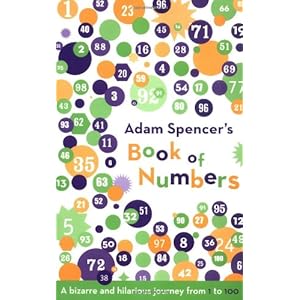
I really like Adam spencer. Maybe it's because he has a Phd in math but chooses to be a morning radio DJ. Or maybe because he is really good at taking complex ideas and making them understandable by most humans (usually in a humorous way). Here is his TED talk on prime numbers. Another great offering is his Book of Numbers where he looks at all the mathematical properties (and oddities) of the first 100 numbers.
http://www.ted.com/talks/adam_spencer_why_i_fell_in_love_with_monster_prime_numbers.html

From YouTube 

From the TED Site