This program is currently being
used in Canada for classes 1-8 and uses a balanced approach called “guided
discovery”. Essentially, students
explore on their own (with guidance), and go through a series of challenges
increasing in difficulty, receiving immediate feedback. This program allows students to work at their
own pace and breaks down lessons into manageable chunks. This helps everyone learn better, because
they move at the speed they feel comfortable and never get overwhelmed with
information. This means LD kids can
learn the material just as well as academic students. Each small concept is immediately practiced
and assessed. This keeps students more
engaged. By learning a small concept,
immediately practicing it, then immediately getting feedback, it resembles more
of a video game format of a reward system – immediate feedback for
accomplishing a task. Even students with
short attention spans can get through the challenges and learn
effectively. In addition, this format of
learning ensures that no child gets left behind and greatly reduces the chances
of students developing gaps. Kids get a
more solid foundation on which to build in the future. The JUMP program also provides training
and resources for teachers to make implementing the program easier. For more information, visit jumpmath.org.
Showing posts with label teaching. Show all posts
Showing posts with label teaching. Show all posts
Sunday, May 25, 2014

Sunday, September 30, 2012
Old Dog, New Tricks
Teaching math has changed drastically since I was employed
full-time. Drastically. When I graduated teacher’s college and began
teaching (Grade 7 - circa 1999), I used chalk, textbooks and overheads in my daily math
lessons.
**** 10 years later
****
Enter to the supply-teaching world a 35-year-old mother of
3, “OCT” - who has never used (let alone seen) a Smartboard. Wowzers.
I have always had a keen interest in technology and taken pride in being
able to help my chemical engineer husband overcome minor PC issues (Right
click! Sheesh.), but this was way over my head.
Pun intended. I officially went
to teacher’s college in the Dark Ages.
Now, even as a (somewhat) seasoned supply teacher, I find it
hard to imagine a day in a classroom without a Smartboard. What on earth would I do? The most ridiculous part about this last statement is that I am still
learning and am probably still considered a total rookie where this device is
concerned. I wish they would provide
Smartboard training for Occasionals.
Thank goodness for the AQ’s.
This is my 3rd course in the last year and I feel like I have
gone to teacher’s college all over again and have gained confidence to get back
into the classroom and conquer the curriculum.
I do realize the Smartboard is just the beginning, am
learning quickly how to utilize it where math lessons are concerned, and loving
every minute. This old dog is ready for
some new tricks.
Friday, June 8, 2012
Game Shows
I got some inspiration while reading the post on board games, because something that can also be used in the classroom as examples of using mathematic skills are game shows.
Let's see:
.jpg) The Price is Right - there are many different mini-games in the price is right that involves probability, estimating, pricing items out, and logical reasoning out a problem.
The Price is Right - there are many different mini-games in the price is right that involves probability, estimating, pricing items out, and logical reasoning out a problem.
Deal or No Deal - probability at it's finest. You could go through the whole game and simulate how probability changes (increases) as you eliminate each briefcase.
Wheel of Fortune - what is the letter that is most likely to make you money? what are some strategies to approaching each category/words being guessed? Look at the wheel, what is the probability of landing on bankrupt or $1 Million? And, considering the final spin, where they give you the 5 most common letters (RSTLNE)
Who Wants to Be a Millionaire - multiple choice questions - talking about probabilities
Bingo / Lottery - although maybe not age appropriate for younger kids (since they can't gamble) they have all probably played it before
 Lingo - Lingo features two teams of two contestants who are given the first letter of a five-letter mystery word and five chances to identify it correctly. The team with the highest number of points earns the chance to correctly identify as many words as they can in two minutes (where in this picture: Red means the letter is correct, a yellow ball means that the letter is beside where they had placed it, and blue means wrong)
Shall we go a little bit older?
Let's Make a Deal - the infamous Monty Hall problem (which has already been discussed in this class)
Press Your Luck (also known as Whammy!) - where contestants collect "spins" by answering trivia, and then spin on the electronic board to win prizes or money, or could land on a whammy and lose everything. Three whammy's and you're out of the game (if I remember correctly)
 Family Feud (although this is still one of the most popular game shows still around, I put it in the older category because of it's roots with Richard Dawson as its host) - the show surveys 100 people with questions and reports its findings - families battle to answer questions for points, and the final round has two people from one family answering questions and giving the best possible answer within 60 seconds (2nd person cannot repeat).
 Card Sharks - using one deck of card, contestants decide if the next card is higher or lower (there's more to it, but that would be the probability aspect of it!)
Match Game - A panel of celebrities would answer a "fill in the blank" statement and a contestant would fill it in, hoping that celebrities might have used the same answer. For each match, one point was earned. In the second round, only those that did not match in the first round would answer (therefore, someone who was behind in the first round could catch up). Winner went on to the final round.
And many more....
So while some of these are more trivia related, you can bring in the concept of mathematics through the chances participants have in actually winning and different stages of the different games. I have always been infatuated with games shows (especially GSN) and whenever I got the chance (cable at the cottage and at my father's house included the channel GSN!!!!), I would be sitting there enjoying the risks people were taking in order to win or get more money (greedy greedy!).
Oh the fun memories I have. Using game shows in the classroom would also increase engagement, because everyone likes to have fun! However, make sure it is not too competitive and that your students know it is just for fun!
Let's see:
.jpg) The Price is Right - there are many different mini-games in the price is right that involves probability, estimating, pricing items out, and logical reasoning out a problem.
The Price is Right - there are many different mini-games in the price is right that involves probability, estimating, pricing items out, and logical reasoning out a problem.Deal or No Deal - probability at it's finest. You could go through the whole game and simulate how probability changes (increases) as you eliminate each briefcase.
Wheel of Fortune - what is the letter that is most likely to make you money? what are some strategies to approaching each category/words being guessed? Look at the wheel, what is the probability of landing on bankrupt or $1 Million? And, considering the final spin, where they give you the 5 most common letters (RSTLNE)
Who Wants to Be a Millionaire - multiple choice questions - talking about probabilities
Bingo / Lottery - although maybe not age appropriate for younger kids (since they can't gamble) they have all probably played it before
 Lingo - Lingo features two teams of two contestants who are given the first letter of a five-letter mystery word and five chances to identify it correctly. The team with the highest number of points earns the chance to correctly identify as many words as they can in two minutes (where in this picture: Red means the letter is correct, a yellow ball means that the letter is beside where they had placed it, and blue means wrong)
Shall we go a little bit older?
Let's Make a Deal - the infamous Monty Hall problem (which has already been discussed in this class)
Press Your Luck (also known as Whammy!) - where contestants collect "spins" by answering trivia, and then spin on the electronic board to win prizes or money, or could land on a whammy and lose everything. Three whammy's and you're out of the game (if I remember correctly)
 Family Feud (although this is still one of the most popular game shows still around, I put it in the older category because of it's roots with Richard Dawson as its host) - the show surveys 100 people with questions and reports its findings - families battle to answer questions for points, and the final round has two people from one family answering questions and giving the best possible answer within 60 seconds (2nd person cannot repeat).
 Card Sharks - using one deck of card, contestants decide if the next card is higher or lower (there's more to it, but that would be the probability aspect of it!)
Match Game - A panel of celebrities would answer a "fill in the blank" statement and a contestant would fill it in, hoping that celebrities might have used the same answer. For each match, one point was earned. In the second round, only those that did not match in the first round would answer (therefore, someone who was behind in the first round could catch up). Winner went on to the final round.
And many more....
So while some of these are more trivia related, you can bring in the concept of mathematics through the chances participants have in actually winning and different stages of the different games. I have always been infatuated with games shows (especially GSN) and whenever I got the chance (cable at the cottage and at my father's house included the channel GSN!!!!), I would be sitting there enjoying the risks people were taking in order to win or get more money (greedy greedy!).
Oh the fun memories I have. Using game shows in the classroom would also increase engagement, because everyone likes to have fun! However, make sure it is not too competitive and that your students know it is just for fun!
Saturday, May 19, 2012
BANSHO
During my grade 5 placement, I was introduced to the concept of BANSHO, but I never really got to experiment with it as I was in an open-concept school and the resources were limited. So, on my grade 2 placement, I got to try it out and I must say, it was a huge success!
For those who don't know, BANSHO is a Japanese teaching technique where students are provided a problem and are allowed to solve it using whatever strategies they chose. After, their answers are grouped according to strategies chosen and are put on display so they can see the various ways of solving the same problem. It's a great teaching tool and I highly recommend trying it out!
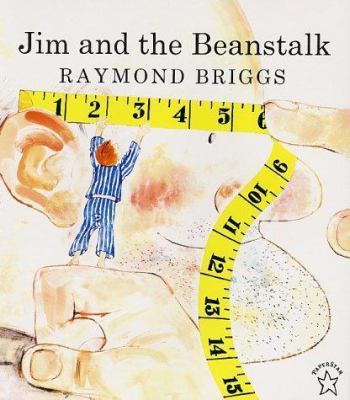
I was teaching grade 2 measurement, so students were just introduced to the concept of perimeter being the "total distance around an object." I read "Jim and the Beanstalk" by Raymond Briggs (a continuation of "Jack and the Beanstalk"), where the giant enlists Jim's help to get a new wig, some dentures, and some glasses. The pictures show Jim measuring the giant. Next, I showed students the problem: The giant wants to remodel his garden just like Jim helped "remodel" him. He needed to find the total amount of fencing for his new gardens. I provided pictures of the gardens and measurements of each straight side and had students trying to figure out the total perimeter. They were allowed to use whatever math manipulatives they wanted.
Walking around the class, I was able to make anecdotal notes of what the students were doing -- I made notes of tools being used (snap cubes, hundreds charts, counters, standard algorithm, base ten blocks) and if students were comfortable using that tool (were they using it correctly?).
 |
| Consolidation at the carpet |
 |
| Our BANSHO wall |
Subscribe to:
Posts (Atom)