Sunday, December 4, 2016

Making Math an Art Form


Most people think Art and Math are polar opposites, and why is it that students love Art class and “hate” math?  Art is considered creative where math is concrete right?  We need to change the mindset and show math for the art form that it is, both subjects use symbolism to create a desired result. Just like art, there are also many different ways to do math.  We need to make math equally as fun and beautiful in order to engage more students.
Take a look at the following site where high school students created mosaics to represent mathematical concepts found in nature.  Patterns and symmetry, symbolism and geometry. The possibilities are endless!


https://kirstingreen.com/math-in-nature/

Thursday, November 24, 2016

Ontario's new math initiatives

I recently read an article from OECTA’s October publication regarding Ontario’s funding for new math initiatives for addressing continued poor performance in math scores.  Overall the article does a nice job of outlining all of the aspects of these initiatives and it sounds like the Ontario government is taking some major steps in this direction.  We can only hope they have the desired outcome of improving math performance in students.

What interested me in particular were the comments regarding the training of lead math teachers for each school.  In response, the author underlined that all teachers in the elementary level are ‘qualified’ to teach math up to grade 8, and so OECTA will work with the ministry to ensure proper protocol is followed.  While all of this is true on paper, how many elementary teachers (who for the most part are generalists) actually feel ‘qualified’ to teach math?  As an occasional teacher I come in contact with many teachers in different schools, and so often these teachers express their concerns and anxieties about their math teaching.

I guess what struck me is the defensiveness with which the OECTA article was coming up against the idea of training math specialist teachers.  I do not believe the point is to question teachers’ current qualifications or professionalism, but for the benefit of students.  If this is how these initiatives are being received, I doubt they will yield the desired outcomes.  Coupled with many teachers’ existing math anxieties, it may be no wonder that many are reluctant to engage in such professional development programs.

Maybe the solution here is to create an environment whereby teachers are encouraged to become more familiar with and better prepared to teach math, but not by being coerced through aggressive tactics and the fears of poor EQAO results…  
  

The link to the OECTA magazine  is here https://issuu.com/oecta/docs/atoecta_oct2016 and the article is located on pg 26.

Thursday, November 17, 2016

Connections with Terry Fox

Making Connections

Making connections to personal life can help in math. Terry Fox lessons for any subject always are great when the school is participating in his fundraiser or walk. Terry Fox was a true hero. In this lesson, students will take a closer look at these numbers and use their prior knowledge to create math equations using actual numbers from this amazing story.

http://www.terryfox.org/SchoolRun/_Library/2012_Intermediate_Lesson_Plans_NATIONAL/N_-_Mathematics_-_Patterning_and_Algebra.pdf

Number Sense and Numeration: Solve multi-step problems arising from real-life contexts and involving whole numbers and decimals, using a variety of tools (e.g., graphs, calculators) and strategies (e.g., estimation, algorithms)

Patterning/Algebra:  Represent linear patterns using a variety of tools  Determine a term, given its term number, in a linear pattern that is represented by a graph or an algebraic equation  Describe different ways in which algebra can be used in real-life situations

Image result for terry fox

Friday, November 11, 2016

Let your fingers do the walking!

Have you ever been in the staff room and heard teachers complaining about their students counting on their fingers? Have you ever told your kids not stop doing it because they need to outgrow it? We all (or a lot of us) have these preconceived notions that using your fingers for math is “babyish” or denotes a lack of mathematical prowess.  Well, after reading this article written by Jo Boaler (ok to me a math guru) my eyes were opened and hopefully yours will be as well.


The article states that there is a “finger-representation” area in their brain where we actually “see” fingers even if we don’t use our actual fingers. The study showed that the better students used their fingers at a young age, the easier it was for them to solve complex problems later.  The researchers go as far as saying that preventing students to use their fingers could “halt their mathematical development”. Visual aids make math meaningful so why not their fingers? Allowing students to use WHATEVER tool they need could quite possibly move math from abstract to “cool” wouldn’t that be awesome?  I give this article a thumbs-up! (pun intended)

Thursday, November 3, 2016

Math of the Future

I recently read an article by Laszlo Lovasz describing some of the trends that have been taking place in modern mathematics and how they might impact math education.  The article is available at the following link: http://www.cs.elte.hu/~lovasz/lisbon.pdf.  Despite being published in 2008, I found it to be very relevant even eight years later.

The biggest eye-opener for me is how wrong I have been in considering 'mathematics' a closed area of research.  That all of the mathematical concepts and theories have been already discovered and that there is nowhere new to go.  Lovasz (2008) explains how the technological advances of the past 50 years, in combination with the increased ability to communicate and collaborate, have hugely increased the work and areas for future work in mathematics.

The author makes another interesting observation that so many of the mathematical advances of the last 200 years are not even being taught, as there is simply too much to learn in our current, traditional math curriculum.  He goes on to say that math is playing a larger role in fields outside of engineering and physics such as in biology and genetics.  This is so relevant given the push in recent years for integration of subjects and cross-curricular teaching initiatives.

I guess the implementation of what the article discusses could only be done with radical shifts and restructuring of our current approach to teaching math.  Naturally, this is unrealistic (at least in the short term), but maybe some of these trends and/or suggestions are worth considering in our modern age of technological advancement.

Lovasz, L. (2008).  Trends in Mathematics: How they could change education?  Retrieved on Nov 1, 2016 from http://www.cs.elte.hu/~lovasz/lisbon.pdf.      


Sunday, October 30, 2016

Financial Literacy

Financial Literacy is very important and the Ministry of Education has many resources outlining it's importance to all curriculum especially math. Math skills can be used in many real life financial decisions the students will be making in their lives.  Please check it out.

http://www.edu.gov.on.ca/eng/surveyliteracy.html

Monday, October 24, 2016

Mechanical Devices and Geometry

Mechanical Devices and Geometry


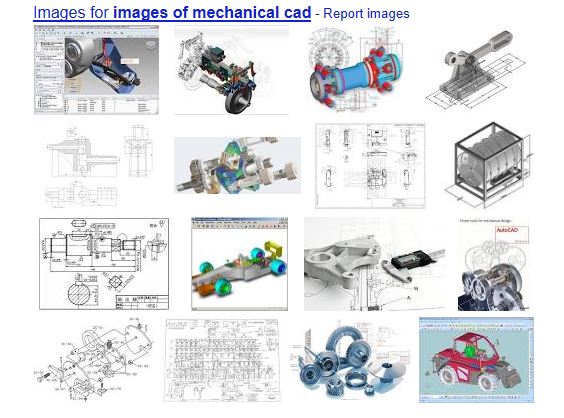
If you've ever considered where to find real life examples to be used in your geometry lessons you have to look no further than the companies who develop Mechanical CAD or Computer Added Design software. These websites are filled with several video and image examples of how geometry is used in design to build devices that are used in everyday life. Simply by going to google and typing in Mechanical CAD provides links to limitless examples.

Here are a few;


Examples of their use in a classroom could be at the beginning of a lesson as a hook or breaking down the image to define the various solids, cube, cylinder, sphere, triangular prism, cone, cuboid etc. You could use images and make a game of "finding the solids" and then relate that back how it is used in real life.  
Other opportunities to involve these images into your lessons is to underline how important language is involved in communicating the information presented. Some of the images show dimensions and relationships between parts., units of measure and scale.
With so many various images you can differentiate what is shown by providing more and less complex images.