Monday, July 1, 2019

Technology in the Classroom - The Bring Your Own Device (BYOD) to School Model


Most current educators agree that the use of technology in the classroom by students help them learn. The Peel District School Board's bring your own device (BYOD) to school model in the classroom is essential. Check it out!

A BYOD model, when used responsibly and combined with the right pedagogy, offers many significant benefits to the learning environment. The model provides access to content that is current, relevant, engaging and interactive. It promotes co-construction of knowledge as students learn more when they collaborate.  When offering technology to all students the instruction becomes more student centric versus teacher centric. On-line formative assessments provide instant feedback to the students. Even when class ends, students always have access to information. The BYOD model and use of technology is essential for the classroom.


Math Libs - Fun Activities For The Classroom


Fun activities in the classroom help students learn. Math Libs do work well in a grade 9 academic math class. Speaking from experience, I found that students get excited, competitive and work collaboratively when working in teams to solve a Math Lib. If posted on the walls of the classroom, students are forced to get up and move around. By completing the Math Lib they create a funny story about their teacher.

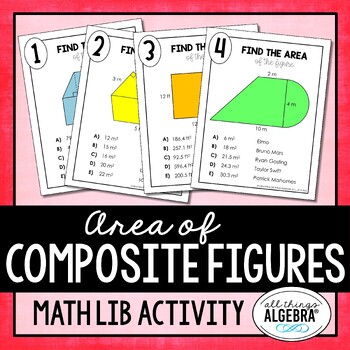
In this activity, students will practice finding the area of composite (irregular) figures. This includes squares, rectangles, trapezoids, triangles, and semi-circles. Check it out!

There are many resources out there, but some math libs can be found on www.teacherpayteachers.com . There is a small fee, but considering you don't have to spend a lot of your own time creating these activities, it is worth it.   

Sunday, May 12, 2019

How to Grow Success?

Posting on behalf of Nick Swiatoschik:

Growing Success is a key document informing the practice of Ontario’s teachers. I find that many of the statements and strategies are very helpful to assessing where students begin, how they progress, and ultimately where they end up. I believe, when possible, allowing for students to earn marks by expressing their thoughts and ideas through varied mediums and technology is of massive benefit to them, their peers, and the teacher. The goal is to see what the student knows and how to help them improve their knowledge base as well as thought process.

I also use frequent and varied assessments that act to further the above philosophies. However, one of the roadblocks I confront on a regular basis is students who are discouraged. I know that this is certainly not a novel problem, but I am interested in hearing if there are any novel solutions.

What are some ways that you engage and motivate students who perform poorly in diagnostic and other formative assessments and become discouraged because of it?

Daily Quiz Perception vs Reality

Posting on behalf of Nick Swiatoschik:

The daily quiz is something that I have found to be very effective in my academic career. That includes administering and taking them; both as a student and teacher I have seen their benefit. However, I have also seen some of the problems and pains that come along with them. As a teacher, the marking load and prep time for each class is bumped up which many find too much of an inconvenience to even consider implementing this practice. As students, the practice can seem overwhelming having to be on your toes day after day and stay prepared.
Hopefully, as teachers we are able to see the other side of each of these problems and all that there is to be gained. First, the most effective quizzes I have used and seen are VERY brief and to the point. They focus on key concepts or terminology and relatively simple problems. They are meant to check understanding and promote student success. The marking and manufacturing of these assessments is a small price to pay for the great diagnostic and supportive power gained. These daily quizzes can be accompanied by a very lightly weighted mark, which also allows a teacher to have evidence for learning and study habits. From the student perspective, this can serve as incentive to stay on top of homework without the stress that large quizzes, assignments, and tests have due to the all or nothing feel of these heavy weights.

I am a proponent of the daily quiz; what are your thoughts?

Tuesday, May 7, 2019

Making the Most of Math Manipulatives


                Manipulatives in the classroom are nothing new. As a primary/junior educator, I see them in classrooms everywhere. Oftentimes, they are displayed in labeled buckets and the students readily use them; unfortunately, this is not always the case. In one of my practicum placements, manipulative tubs were pulled out during indoor recess to be used as toys. This certainly saddened me.

I have seen first-hand how this amazing tool can help students learn by providing hands-on learning and support to students. Not only would this be beneficial in the primary and junior years, but manipulatives can support student learning in the intermediate and senior years as well, so it is essential for educators to fit them into their instruction in order to improve math proficiency. Manipulatives take something abstract and turn it into something concrete; thereby allowing students to become engaged and take ownership of their own learning.


Marilyn Burns, is a math specialist who has been teaching for over thirty years. She is a highly respected educator and continually creates professional development resources for educators. Marilyn is an avid supporter of using math manipulatives and backs the idea that these tools help students get a grasp of math concepts. She is such a strong believer that she created a Scholastic resource on how parents and educators can use manipulatives to help with math education. It is definitely worth a read, especially if you’re on the fence about whether or not to use them in your classroom.

How Can We Make Math Meaningful?

My earliest memory of math is from way back in grade three, which is over thirty years ago. We had to memorize our multiplication tables. The class would chant as a collective, while the teacher pointed to where we were on a chart. I knew my multiplication facts inside and out. Unfortunately, I did not really have a grasp of what multiplication was or meant. Luckily, that did not seem to matter to my teacher. The class would often play a multiplication “racing” game. We would form two lines, side-by-side, on one end of the classroom. The teacher would stand somewhere in the middle of the room facing us, and she would hold up multiplication flash cards. The first student to answer the question correctly would move forward one step. The first to the finish line was the winner. I was very competitive and was very often the winner, thanks to my diligent work done at home, repeating the times tables over and over each night.

In grade three, this was fun for me; unfortunately, the fun in math did not last and things went downhill from there. Not my grades, though—my math grades remained exceptional. I was always good in math, and by good I meant that I was able to memorize formulae and follow prescribed algorithms to arrive at the correct answer, in the exact way the teacher expected. Unfortunately, as the years passed, math was no longer fun for me. Despite my grades, I did not really feel like I completely understood it. I did not know why the steps involved were important to follow, and, just like with multiplication, I did not understand what many concepts meant. Math class always started with taking up the previous night’s homework. We would then move on to definitions, formulae, algorithms, and procedures. Next, it was time to watch the teacher put an example up on the board. Finally, homework would be assigned. This was the same, day in and day out—a never-ending cycle.


As an educator in the 21st century, I feel that it is essential to move away from this model of teaching. Rather than the student being a “blank slate” and the teacher the giver of knowledge, we must make math meaningful. Kyle Pearce and Jon Orr are two math educators who are revolutionizing the mathematics classroom. They strive to “make math moments that matter” . They share their strategies on how to create a classroom where students want to keep exploring. The main idea is that the way I learned math is not how it should be taught today because that format rarely leads to students becoming interested or curious about math. They suggest that we start with some kind of a hook activity to spark the students’ curiosity. Then we let the students explore the topic. Let them come up with strategies and answers of their own on how to solve the problem. After they have made sense of it all on their own, or at least tried, then we come together as a group to consolidate our learning. Looking at this model from a young student’s perspective, I can see how this would certainly make the learning more meaningful, less boring, and highly engaging.

Monday, May 6, 2019

Building Them Up Through Literacy in Math

Math Literacy: An Integral Strand While Weaving the Basket of Learning

It wasn't so long ago that teachers were seen as the givers of knowledge who were meant to fill the empty vessel: the student. A great paradigm shift has taken place in education and the goal of the teacher is now known to be to build up the student with the many fabrics (i.e. facets) of learning in the model of weaving a basket. A facet of learning in the Math classroom that must not be overlooked in the regular incorporation of literacy in Math. You may ask yourself, "Did she mean to use the term 'numeracy' since she is referring to a Math classroom?" To that, my answer is an emphatic, "No!" Literacy in the Math classroom starts by making the concepts in Math accessible and meaningful to all of your students through the use of language, text, graphics and questions that put students in a position to ask meaningful questions and access information themselves. Chad Broome is an American middle school teacher who uses YouTube videocasts to showcase how Disciplinary Literacy in Mathematics can be used to encourage literacy in the Math classroom. Broome begins a new concept by showing the class a graphic or piece of text and then poses the questions, "What do you notice and what do you wonder?" By opening up the discussion in a conversational manner, students are encouraged to introduce their own thoughts and ideas based on their own observations and curiosities on the topic at hand. Through this approach Broome encourages neighbouring students to collaborate and identify trends and patterns in data presented and to formulate problem solving strategies based on their own reasoning and collaborative input from their peers. Broome encourages literacy in the classroom and uses it as a key strand in the fabric of higher order thinking that allows students to problem solve and ask important and meaningful questions of themselves and of each other. Students are able of asking and answering the 'big questions' if only we give them the opportunities and encouragement to do so!


Rhetorical or Meaningful; Are We Just Talking to be Heard?

We have all had that experience of knowing someone, whether it be in our personal or professional lives, who seems to talk and ask questions just to be heard. As educators, we should strive to make the direct questions we ask of our students effective and meaningful. There is great value in the use of open-ended questions where students are asked to dig deep and make their own connections to the topic at hand, however now I would like to consider strategies used to as effective and direct questions of your class. In their Literacy and Numeracy initiative, the Ontario Ministry of Education, published the Asking Effective Questions in Mathematics which can be accessed through the EduGAINS site.  A number of helpful guides to higher level question-asking for the Math classroom are featured and one example of such is pictured below:


Posing such questions allows for the students to make connections and allows them to make inferences and draw conclusions based on their observations and their reasoning skills. The use of prompts provides the opportunity for the teacher to give the student the floor to use their own voices to work out a problem verbally, justify and support their thought process, and essentially, to think out loud. If we want to welcome literacy into the Math classroom a great start would be to keep encouraging our students by leading them in a way that they become comfortable thinking out loud. 


Thursday, November 8, 2018

Knowing Thy Impact

Knowing Thy Impact
John Hattie's work on Visible Learning is applied to Mathematics in his book titled Visible Learning For Mathematics: What Works Best to Optimize Student Learning.  In this book, the authors examine the plethora of "research-based" instructional practices in an effort to provide recommendations for best-fit teaching.  In a seminar in Toronto this summer, John Hattie recommended that educators resist getting seduced into a single form of instruction and opt for an understanding of the impact of various types of instruction to produce significant results and maximize student achievement.  He labelled it the Goldie Locks approach to instruction:"Not too hard and not too boring". This reminds me of Vygotsky's Zone of Proximal Development.  Matching instructional practices and strategies with the student's readiness to learn.  In sum, Hattie et al.'s framework asks the teacher to consider when particular teaching strategies are most beneficial, and where a student is in his or her understanding of a concept.


Making Algebraic Thinking Visible

Making Algebraic Thinking Visible
This clever problem would be an excellent way to lead student's into a dialogue about using different methods to solve a problem.  Further, it has an accessible entry where visually a student may be able to deduce the height of the table and it allows other student's to reason algebraically with multiple variables.  This could be used in an elementary class as an intro the algebraic inquiry, yet it could also be used as a "minds on" exploration in the senior grades before demonstrating how to solve equations with more than one variable.  Overall, it is a gripping challenge and would allow the students to engage in mathematical dialogic investigation.


Watch the video below by Presh Talwalker at Mind Your Decisions to see two methods to solve this problem.  It could also be solved using bar modelling from Singapore's Primary Mathematics program. 

Geometry Snacks

Geometry Snacks

I was intrigued by a geometry question I saw on  Twitter which credited authors, Ed Southwell and Vincent Pantaloni.  Geometry Snacks is a great mathematical puzzle book with many geometrical figures that will lead the student through several complex challenges.  The problems are fun, increase in complexity and allow students to see how many approaches one can use to solve a problem.  The first questions could be used to challenge elementary and middle school students, whereas the latter challenges involve the application of higher level mathematics and logic.  Once a student has solved the problem, the authors also provide further challenges. The rich geometric vocabulary makes this little pocket book, an excellent resource for teachers of Mathematics.


A Sample Question for Geometry Snacks as presented by blogger and author Presh Talwalker.


Wednesday, October 10, 2018

Sentences Stems

Sentence Stems - Helping Students to Participate in Academic Conversation

In our mathematics classrooms we want our students to have engaging conversations that encourage students to think critically about each other's ideas.  When students think critically they must challenge each other's responses and ask for clarification.  Being able to participate in scholarly conversation is a skill that needs to be taught; it's even more difficult for English Language Learners (ELLs) who are trying to learn the language and content at the same time.  This summer while taking my ELL Part 1 course I learned about the use of talk stems that provide students with sentence starters for initiating academic conversation.

A poster like this, hung on your classroom wall can be used as a form of reference for students when they are working in groups.  Making reference and modeling some of these sentence stems would be very beneficial in classroom discussion.

Poster taken from: https://mrlhuillier.wordpress.com/


Sunday, October 7, 2018

Symbolab Friend of Foe?

Several of my students have been talking about the Symbolab website and Symbolab app for solving various math problems.  The site covers content in algebra, graphing functions, calculus, geometry, statistics, physics and chemistry.  Students can type in a problem or equation and pick from a list of solutions, complete with step by step instructions and explanations.  It is certainly a helpful tool when struggling to complete homework, but will students use it properly or simply right down solutions? After trying the Symbolab website for myself I have to say I'm impressed with some of its capabilities, however, I'm a little reluctant to recommend it to students because of the ads that keep popping up for dating sites.  Here is a screenshot of the solution provided to me when I typed  2x-y=8  and 3x+y=12 into the search bar. 

What do you think?

Sunday, August 5, 2018

"New Math" vs "Old Math": Tips for First Year Math Teachers?


Being a young, new teacher fresh out of Teacher's College is frightening! Now with the program being 2 years, it still seems like what you learn in practicum as a student teacher is not nearly enough and there is so much more to learn! And with this, so many things have changed since we were students - the internet has changed the way things are being taught from traditional math on a chalk board to interactive, online approaches, videos, and more! The learning curb is steep and even if an LTA presents itself, there's only so much time for us to prepare for it and then so much more learning comes with it.

Being a science teacher, I have never taught math (hence taking an ABQ). What is your advice for new math teachers? What are the best approaches? What are the must-do's vs. the things that might not need to be emphasized as much? I found a thought provoking article called Meet the New Math, Unlike the Old Math that encourages a new approach to math (written in the US). Away from teaching how to solve equations but more on how to analyze functions, as well as shifting more towards big ideas in the curriculum and having more communication about mathematics. The article is a bit long but quite an interesting read. Is this the approach that most math teachers frequent now? Or is the emphasis focusing on teaching concepts one by one from the curriculum? What are the best strategies to making math education fun and effective for all (student and teacher)?


Math Prodigy - Thoughts??


Math Prodigy website link

Although not as common in high school, I have heard the game 'Math Prodigy' thrown around a lot by students and teachers! I myself have had no experience with the game (I just created an account out of curiosity today) but it has me thinking if it could be an effective tool for 'gap filling' for Intermediate (Applied/LD classes) as well as math tutoring outside the classroom, such as fun homework practice since it is linked with Ontario math curriculum from Grade 1-8. Has anyone had any experience with Math Prodigy and could share some thoughts?

What I liked about the video on the Prodigy home page is that like many other online websites, Prodigy allows you as the teacher to monitor student progress to see how well students are grasping concepts broken down by topic. It also allows you to create your own assignments for students which is a neat feature I never knew about! There are also virtual manipulatives and you can choose to use Ontario math curriculum or Prodigy math curriculum (whatever that may be). Lastly, it's so multifaceted - from being able to see feedback from students, use it as formative assessment and a neat differentiation tool. Plus... it's a game! I'm assuming that's part of the reason why student's get hooked on it. Would love to hear what you think about it since it seems like it would be a worthy tool, but would like to hear any first hand experiences with it first. Thanks!

Wednesday, June 27, 2018

Math is for everyone!


Math is for Everyone!


I saw this cartoon and thought of my students in my math class. The students in my class are always complaining that math is the hardest subject and you have to have a mathematical mind to even do the questions in the course. So I asked them why they feel like it is so difficult and there simple explanation was "it's never the same sir! There are so many question to know." Then it hit me they were trying to memorize what to do without fully understanding the why, we do what we are doing and fully understanding the concept that was being taught. So from that point on I started to focus on the why, not skipping any simple steps in solving for equations.  Getting my students to develop steps for understanding how to go about solving anything from a linear system to a word problem within the course.  I wanted them to learn to think about what they learned and apply the knowledge that they got in class.  I wanted them to know anyone could do math if they work hard and tried their best. I didn't want them to think that it was a clever scheme meant to trick them. So after I was done my lessons I would give the students a question based on that days class and have them answer it. I would not just have them calculate the question but I had them write out the steps they took in words to solve it.  Then I had them get into groups of two and all they could do was read the steps to the other person to see if that other person understood what they did. This forced them to think about what they were doing rather then just doing it. When they were in those small groups they really had to communicate their thought process to each other.  I repeated this with my class for a week. At the end of the week I found that they were understanding the why better then they did at the beginning of the week. Has anyone else ever tried a similar method?  How well did it work for you?

Frustration in Math

In math, I feel like everyone was has been so overwhelmed where there is a mix of frustration, anger, confusion, sadness and disappointment during the learning or practice of a math concept.  Now as a future teacher and a current tutor, I can see it in my students' faces sometimes and it is hard being on the other side of the knowledge.

Image result for having trouble in math is like sweating in basketball

I saw this quote the other month on Twitter and it made me smile.  I feel like in school, math is looked upon more of a nerdy thing and "not cool".  Because of this, I feel like it adds to the overwhelming emotions at a tough point in math.  I feel like in sports, it is more known in social media that struggling is part of the grind and you will get better because of this.  It is funny how this does not translate to the struggle in math (or any other subjects).

This brings me back to the quote I saw above.  I think that math is very cool, is needed in many facets in life and is fun.  I feel like the discomfort can push students away but if they are shown this quote, know the importance of math and that they understand real life applications of math, they will be more positive towards the struggle. This could definitely benefit students and although is not as easy as what I wrote above, I believe that it is a strategy worth exploring.

I know it will be a future poster in my class.

Any thoughts on this?

Maksym Cord

The Amazingness of Calculus

This is a PSA,

I think that calculus should get much more credit on being a really cool course.  Maybe my teachers did try to tell us this, maybe not but I think something more should be done to show this.

When learning about calculus through a book, it blew my mind.  This was especially so because I was adept at advanced functions and learned to work with linear equations and figuring them out and how to use them in real life applications.

So I was reviewing the book and it soon told me that linear functions used methods to find out information on straight lines.  That's awesome you say but wait theres more!  Then it went on to say that straight line relationships are quite unrealistic in life and that in real life, the lines are more curved (like the one below).


Image result for calculus graph

So what?  Well what blew my mind is that somehow, people figured out how to solve for information on curved graphs to then solve for real life situations.  Further, the creativity needed to understand that as you zoom in enough on these curved lines, they will end up as straight lines which will then let you solve like a linear equation.  They then figured out methods to get the sum of these calculations to use to then solve a whole curved line. WOW!

Maybe I should get more hobbies but people need to see this!

I hope to plan out a way to communicate my enthusiasm as a senior math teacher.

Maksym Cord

The Harder he Material, The Better I Do?

Hey all,

Image result for 1=2

I wanted to tell you about my experience with senior math courses throughout high school.

I remember before I would change schools (elementary to middle, middle to high, high to university), teachers would make a point to try and get you line by saying that "oh the teacher won't chase after you for marks and they will just fail you."  To me that worried me but I soon found out that teachers definitely do chase you for marks (whether elementary, middle or high school) (though not as much).  This sort of gave me a relaxed outlook on really trying in school.

In grade 11 I heard this speech again but for some reason, I really believed it this time.  I believe this was due to my parent and family telling me the same sort of thing.  When this happened, I started really focusing and trying in school.  At the same time, I entered into "Advanced Functions" which was notorious in the school for being hard.  For whatever reason the mix of effects from these two things made me really try especially hard in math class.  I think that the complicated looking symbols and equations helped this aswell.

I begun really paying attention and doing my homework everyday.  This brought my typical 70-75% average every year in math to the highest in the class at 96%.  This showed me how powerful homework and paying attention was and I learned through this that math was fun and was just basically puzzles.

This then lead me to enjoy the math and made me want to teach others how fun it could be.  This then lead me to here, aiming to become a high school math teacher.
Image result for 1=2
I hope I am able to instill this outlook for my future students.

Thanks for reading, does anyone have any ideas on how to do this?


Maksym Cord

Tuesday, June 26, 2018

Why do I need to learn math?

Why do I Need To Learn 
Math?


I have been a secondary school teacher, teaching for eighteen years, I recently started teaching math and have fully learned to appreciate it as well as learned to enjoy it!  

My students always ask the same question  "Sir why do we need to do this? Or what is the point of even learning math?" Just to let you know its more then telling them there will be a test on it in the future. So when I begin teaching a math course I always show this YouTube video I found that explains why in fact you should be learning math. It show students that math is everywhere and that taking math opens a lot of doors in the future for careers.  It also tells them that math is for everyone if you hang in there the reward of solving a problem and understanding is amazing.  

I know as math teachers we need to teach curriculum but I think it is important to inspire our students to let them know why they are learning it. To motivate them to want to learn, to love learning.  To let them know it is a challenge and that we grow from making mistakes and learn from them! 

Let them see you love what you do, share your passion! 

This video is great for any high school math class as an introduction to your course. Here is the link to the video I was talking about:

https://youtu.be/90wFGf534ao